THE FREDERICK NEWS POST
Gettysburg 150th Anniversary Battle of Gettysburg
Frederick duo unearths area's buried Civil War history
By Daniel J. Gross News-Post Staff
John Barone has found hundreds of Civil War relics buried throughout the region — belt buckles, cannonballs,
bayonets — but he doesn’t have a single favorite from the decades of digging.
“It’s the one I just unearthed,” he said. “It’s the one I just brush aside when I know I’m going to be the first person
to see it in the last 150 years.”
A Frederick resident and retired cancer researcher for the National Cancer Institute in Frederick,
Barone has been devoted to finding Civil War artifacts alongside colleague C. Paul Martz since 1997.
The two men do as much as possible to preserve the area’s history and showcase items to spark interest.
Barone’s interest in Civil War relics and preservation began as a child when his neighbor found a
Revolutionary War bayonet in a stream in New York.
He began finding items professionally with Martz after the two met and realized they shared the interest.
The two formed the Civil War Artifact Preservation Association to search through private land they conclude
was once home to Civil War battlefields, hospitals, encampments or trails.
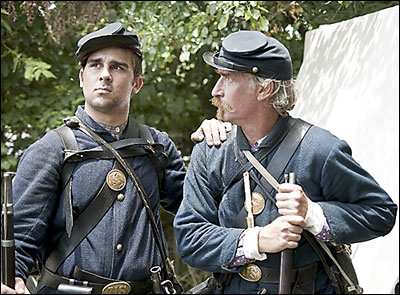
Martz, a former janitorial custodian at The Frederick News-Post and Civil War re-enactor, said shovels do not touch ground
until they’ve acquired written permission from the landowner and agreed to patch every hole they dig.
Buttons, insignia, clasps, pistols and bullets have all been found after hours of searching properties with metal detectors and
even more hours of researching locations before a dig, Barone said.
“It’s a matter of patience. Think of fishermen. They have an unlimited amount of patience,”
he said. “Frederick County has a lot of sites. There were battles, troops movements and camps here. Since there’s new
development coming, there’s a rapid need for this.”
The association will host a display booth with a collection of their findings at the annual living history reenactment
at Rose Hill Manor Park and Museums in Frederick July 13 and 14 as part of a Civil War commemoration.
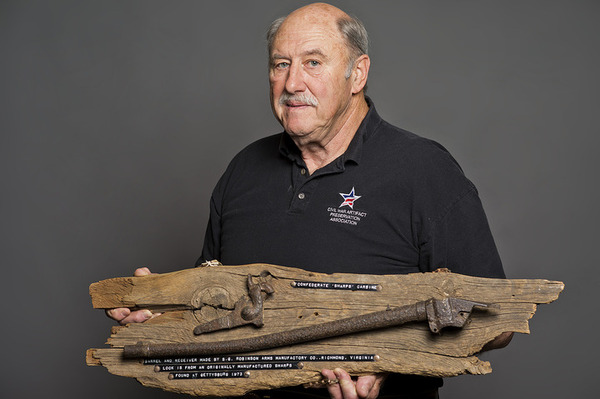
John of the Civil War Artifact Preservation Association,
holds a Confederate Sharps Carbine, made by S.C. Robinson Arms Manufactory,
found at Gettysburg in 1973
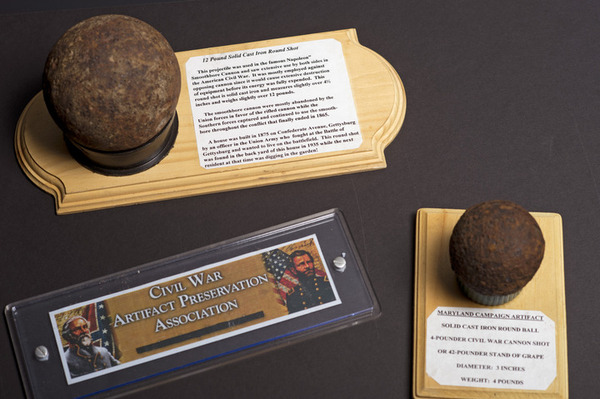
A twelve pound solid cast iron shot and a smaller 4 pounded from the collection of John Baron, of the Civil War Artifact Preservation Association, both found at Gettysburg.
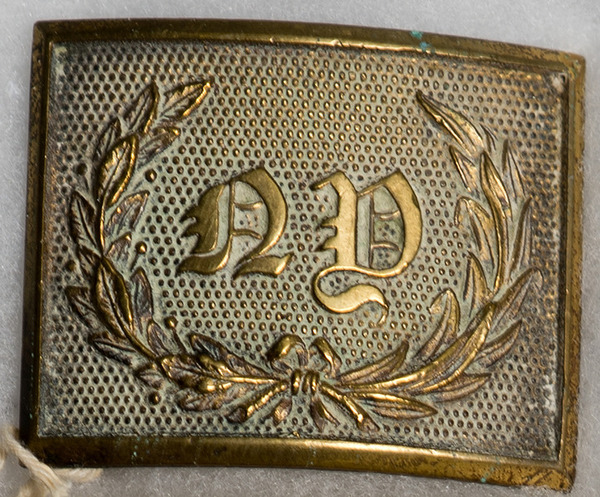
New York State militia sword belt plate from the collection of John Baron, of the Civil War Artifact Preservation Association, found at Gettysburg.
The pair is continually seeking artifact donations to add to their collection and preserve history.
Those interested are asked to call the association at
(304) 279-5481
E-mail: martzclarence@gmail.com
-----------------------------------------------------------------------------------------------------------------------------------------------------------------------
Digging Civil War artifacts more than hobby for re-enactor
Originally published August 17, 2012
By Ike Wilson
News-Post Staff
C. Paul Martz routinely spends entire weekends digging for Civil War artifacts he describes as buried treasure that should be appreciated and preserved.
Since 1997, Martz, a janitorial custodian at The Frederick News-Post, has devoted his spare time to finding the objects.
He and colleague John Barone established the Civil War Artifact Preservation Association.
"Our mission is the recovery of artifacts and to preserve them for years to come, and for the public to see, " Martz said.
"When I find an artifact, it is very special to me for the simple reason that I found it. It is a piece of history, and once a man like me owned it."
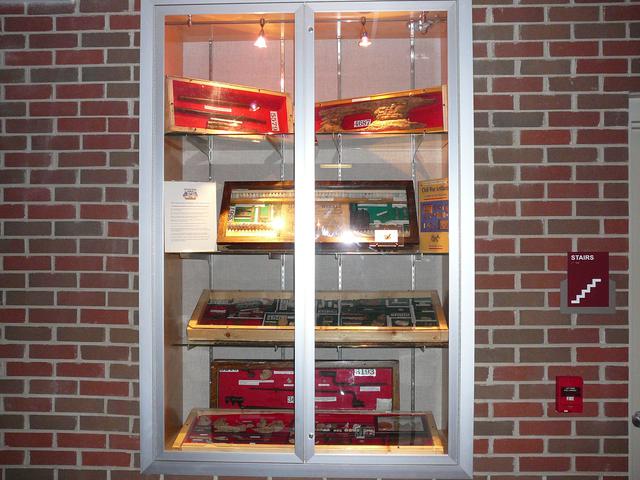
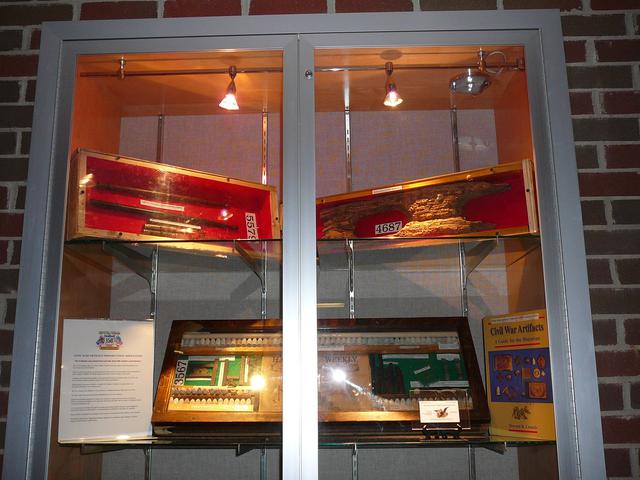
Martz and Barone have collected enough remnants of the everyday soldier's life and war to fill 14 display cases in museums in Harrisburg, Pa., Shepherdstown, W.Va., and Richmond, Va.
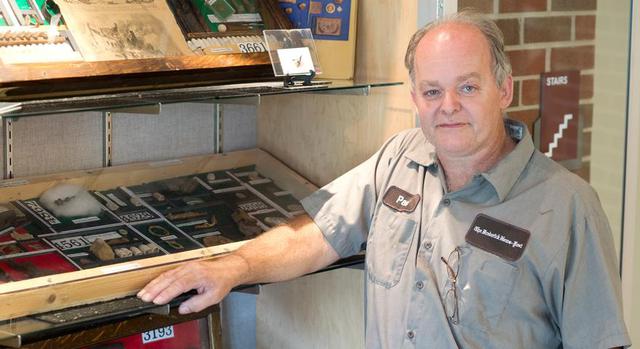
One of the displays is currently in The News-Post lobby.
The two men have found exploded cannonballs, bayonets, belt buckles, bullets, cannon fuses, butt plates, pieces of oil lanterns and Civil War trunks, parts of a reed pipe and harmonica, melted bullets from fire pits, and a fence post with bullets.
They have also recovered drumsticks, forks, knives and teaspoons; pocketknives, an Eagle breast plate; clay pipe; breech plug; buck and ball ammunition and artillery shells.
Martz and Barone will display some of their finds Sept. 14-15 during a celebration at the Sharpsburg town square.
A Keedysville resident and Civil War re-enactor, Martz has found the most objects in Sharpsburg, he said, but not on battlefields.
You can not dig or hunt on State land or battlefield park land.
Martz and Barone dig on private properties, with permission,
The not-for-profit preservation organization lends the displays to schools so that children can learn about the Civil War, Martz said.
"The lesson is to let them know how bad war is," Martz said. "We also hope there won't be another."
Recovered artifacts are documented using five books.
Civil War objects are deteriorating rapidly in the ground and will be lost forever unless they are properly preserved, Martz said.
The men also work with state and local archaeologists.
They use their metal detection equipment to home in on potential finds, then the archaeologists take over with the dig, Martz said.
Rapid development and growth today have created an urgent need to preserve our history by recovering pieces of our past, and collecting data that will be useful in telling the history of each archaeological site, Barone said.
"We go to great lengths to provide the most accurate history or documentation available for the items we examine," Barone said.
Martz found a Rhode Island state seal coat button and through research linked it to the 9th Corps at the Battle of Antietam. "It was a nice button," Martz said.
Each item is numbered according to the location it was found, or from whom it was donated.
"We believe historically significant artifacts should not be traded or sold randomly without regard to their historic significance," Martz said.
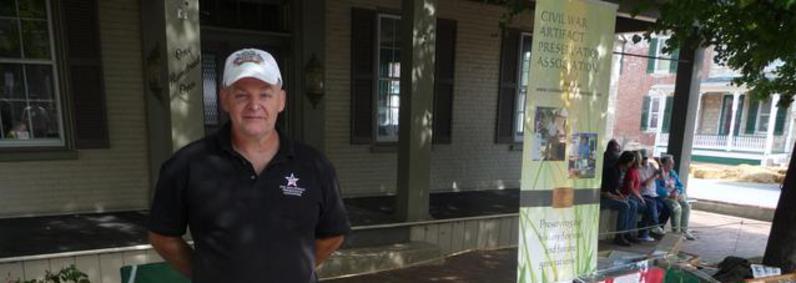
Clarence Paul Martz stands next to a display case containing artifacts from the Civil War,
which he recovered from private property with the consent of the owner.
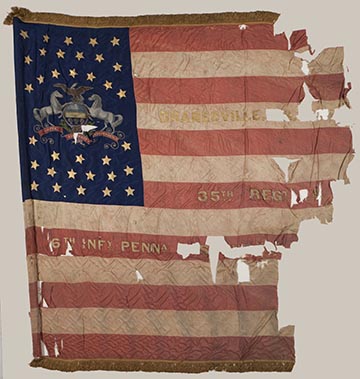
35th Regiment 6th Pennsylvania Volunteer Infantry